
Indigenous-Led, Land-Based Support for Mental Health
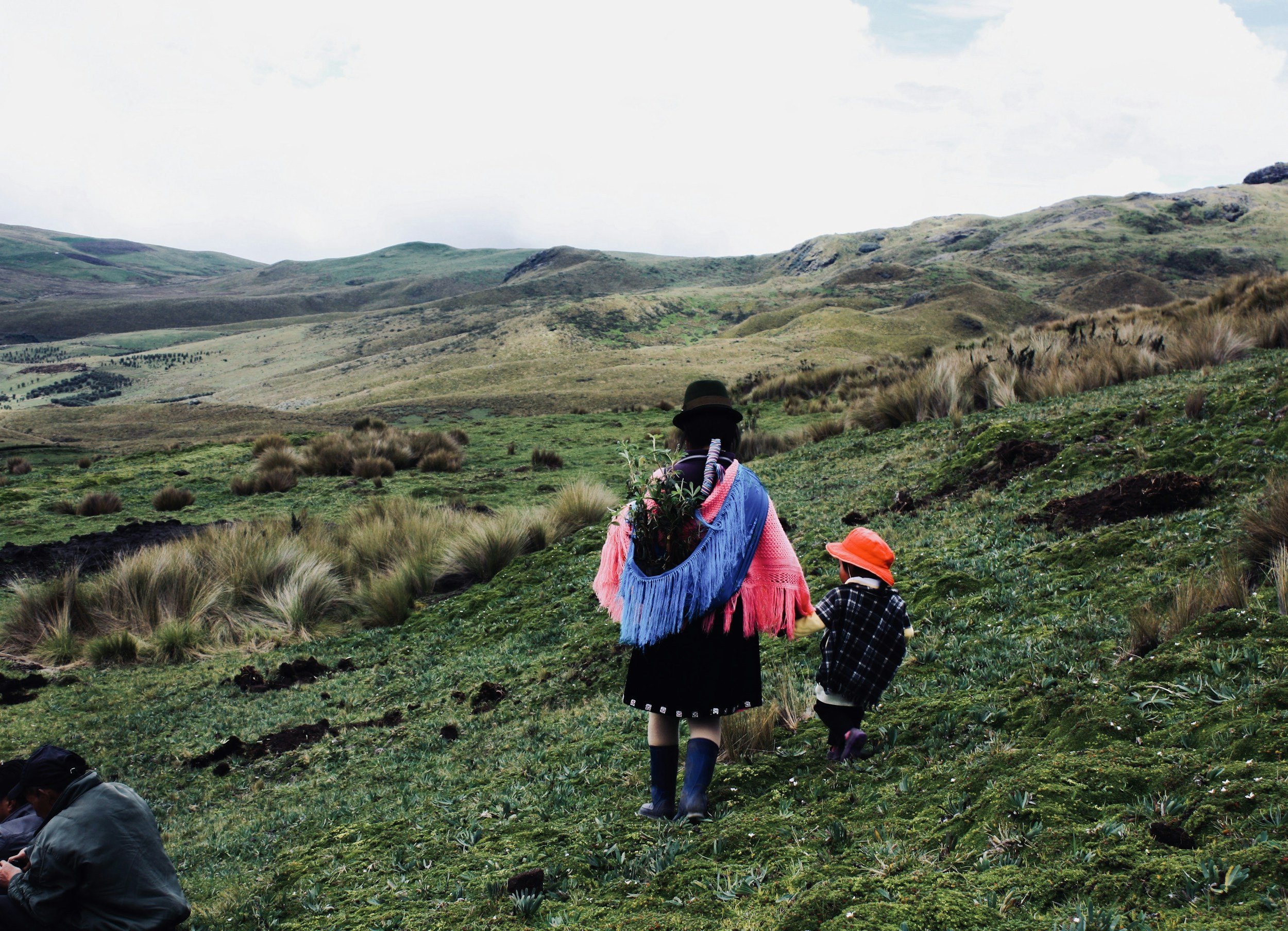
I want to talk about something that I believe is one of the most significant — and most underacknowledged — conversations happening at the intersection of healing, science, and justice right now. The recognition that Indigenous-led, land-based healing frameworks are not merely cultural practices to be observed from a respectful distance, but living, evidence-informed systems that hold some of the most sophisticated and effective approaches to mental health that we have.
Modern science is not so much discovering something new, as developing instruments capable of measuring what Indigenous and ancient systems already knew experientially. That sentence landed in my body like a stone in still water when I first encountered it. Because it is exactly what three decades of working in holistic healing has shown me. Over and over. In healing rooms, in women's circles, beside rivers and in gardens and at the edges of forests where the light changes everything.
The Land as Healer: What Research Is Confirming
Land-based healing — reconnecting people with the earth, with traditional practices, with cultural identity and relational knowledge — is now being studied with increasing rigor and depth. A mixed-methods study of the Gwekwaadziwin Miikan land-based treatment program, an Anishinaabe-designed approach for mental health and addiction, reported that participants experienced strengthened connection to Indigeneity and the land, with many maintaining meaningful recovery six months after the program. Programs that use land connection and culturally rooted healing can support longitudinal recovery outcomes. This is extraordinary.
A place-based study of Traditional Healing Spaces within a major Canadian mental health hospital documented benefits in care delivery for Indigenous patients, including affirming Indigenous treatment traditions, building cultural safety, and fostering staff learning. The message embedded in this research is profound: healing is not merely biochemical. It is ecological and relational. This is what Indigenous systems have long asserted, and what the evidence is now supporting.
What Animistic Worldviews Understand About Wellness
Many Indigenous cosmologies — Haudenosaunee, Anishinaabe, Lakota, Māori, Aboriginal Australian, and countless others — describe humans not as separate from nature but as kin within a living web of relations. Health, within these frameworks, is not an individual condition to be achieved through isolation and intervention. It is the balancing of relationships: between people, ancestors, spirit, and land.
Ecopsychology and nature connectedness research are confirming what these worldviews have held for generations: people who perceive themselves as part of nature have lower depression and anxiety, greater life meaning and resilience, and more prosocial and sustainable behaviors. The ancient assertion that 'we belong to the land' aligns directly with modern findings that psychological health deteriorates when humans experience disconnection from natural systems.
Research on awe and transcendence shows that experiences of vastness and beauty in nature give rise to wonder, connectedness beyond the self, and shifts in perspective that resemble spiritual or existential well-being. What elders and ceremony-holders have called 'the land calming the spirit' maps directly onto nervous-system regulation — measurable, physiological, real.
Community, Culture, and the Biology of Belonging
One of the most consistent findings in Indigenous health research is that kinship, community, and cultural identity are key resilience factors for people experiencing mental health challenges, trauma, or substance use difficulties. This isn't soft science. This is psychoneuroimmunology: belief, context, emotional safety, and social belonging directly affect immune and endocrine function.
A landmark analysis found that strong social ties increase survival rates by approximately 50% compared with socially isolated individuals — effects comparable to cessation of smoking or regular exercise. Both social connection and nature contact operate through the same biological pathways: stress modulation, endocrine balance, and immune regulation. The Indigenous understanding that healing requires community — not just technique — is not only culturally important. It is biologically supported.
This is one of the reasons I create women's circles and healing retreats for women rooted in nature, in shared practice, in collective witnessing. The research on group nature activities consistently shows enhancement of social connectedness and community bonding — themselves powerful contributors to emotional health and resilience. When women gather in right relationship with each other and with the land, something ancient and essential is restored. Not just psychologically. Biochemically.
Trauma, Land, and the Path to Wholeness
For those carrying the weight of trauma — including those healing sexual trauma, recovering from psychological trauma, or navigating complex histories of loss, displacement, and pain — land-based healing offers something that no clinical room alone can provide: felt safety. The sense of being held by something larger, older, and non-judgmental.
Polyvagal theory — one of the most significant frameworks for understanding trauma-informed care — aligns beautifully with Indigenous emphasis on felt safety in stable natural environments. The vagal system, which governs our capacity for social engagement and rest, is directly regulated by the natural cues of birdsong, breeze, dappled light, and the presence of living green. These are not incidental comforts. They are neurological regulators.
Somatic experiencing exercises grounded in nature — conscious movement through forest or meadow, sitting meditation in a garden, hands in earth, slow observation of seasonal change — offer the nervous system exactly the co-regulation it needs to move out of freeze, flight, or fight and toward the possibility of healing. For those learning how to heal trauma in the body, these practices offer a doorway that is both ancient and scientifically grounded. This is evidence-based alternative healing at its deepest root.
The Meeting of Two Knowing-Systems
A current paper in the American Psychologist argues for deep engagement with traditional healing systems — beyond superficial inclusion — to rectify colonial biases in mental health research and practice globally. This matters enormously. Because the integration of Indigenous knowledge into trauma-informed care, addiction treatment, and community mental health is not a matter of adding cultural decoration to existing frameworks. It requires genuine recognition that these are legitimate healing sciences.
The concept of Two-Eyed Seeing — holding Indigenous knowledge and Western clinical knowledge simultaneously, with equal respect — is showing real promise in integrated healing models for trauma and addiction. Scoping studies show that cultural interventions including sweat lodge ceremonies and identity-affirming practices have been associated with measurable wellness improvements across mental, physical, and spiritual domains.
And the synthesis insight that emerges from all of this research is one that I carry in my bones: health emerges from right relationship — with land, rhythms, community, and meaning. Not from the suppression of symptoms. Not from the management of pathology. From right relationship.
Practical Pathways: How to Begin
If this resonates — if you are searching for outdoor therapy near you, evidence-based healing modalities that honor the whole person, or simply a framework for your own healing that feels more aligned with how life actually works — here are some entry points I suggest:
Spend deliberate, receptive time in nature every day. Not exercising through it. Being in it. Sitting. Observing. Letting it work on you. Even ten minutes of mindful nature contact has documented psychological benefits.
Explore flower therapy, particularly bach flower for anxiety and emotional healing. The bach flower remedy list of 38 remedies was developed by Dr. Edward Bach in the 1930s through deep, relational observation of plants — a mode of knowing that has much in common with Indigenous plant wisdom. These natural remedies for anxiety and natural remedies for mental health work gently and with intelligence.
Consider breathing exercises for anxiety practiced outdoors, where the nervous system can fully benefit from both the breathwork and the natural environment simultaneously. Conscious breathing beneath trees — extended exhale, soft gaze, awareness of the body's weight on the earth — is one of the simplest and most powerful somatic experiencing exercises available.
Seek community. Women's circles, healing groups, land-based workshops, and healing retreats for women create the relational container that research consistently shows is essential for deep healing. This is not optional enrichment. This is biological necessity.
A Closing Reflection
The ancient warning embedded in many Indigenous teachings — that if the land is sick, the people will be sick — is now a public health reality. And its corollary is equally true: when we restore our relationship with the land, something in us begins to heal.
I have seen this in thirty years of working with flowers, with herbs, with the bodies and stories and dreams of people seeking wholeness. I see it in the research emerging from every corner of the scientific world. And I see it in myself — in the way this February light, soft and tentative and full of promise, does something to my nervous system that no supplement alone can replicate.
The land has always been the healer. We are only remembering.